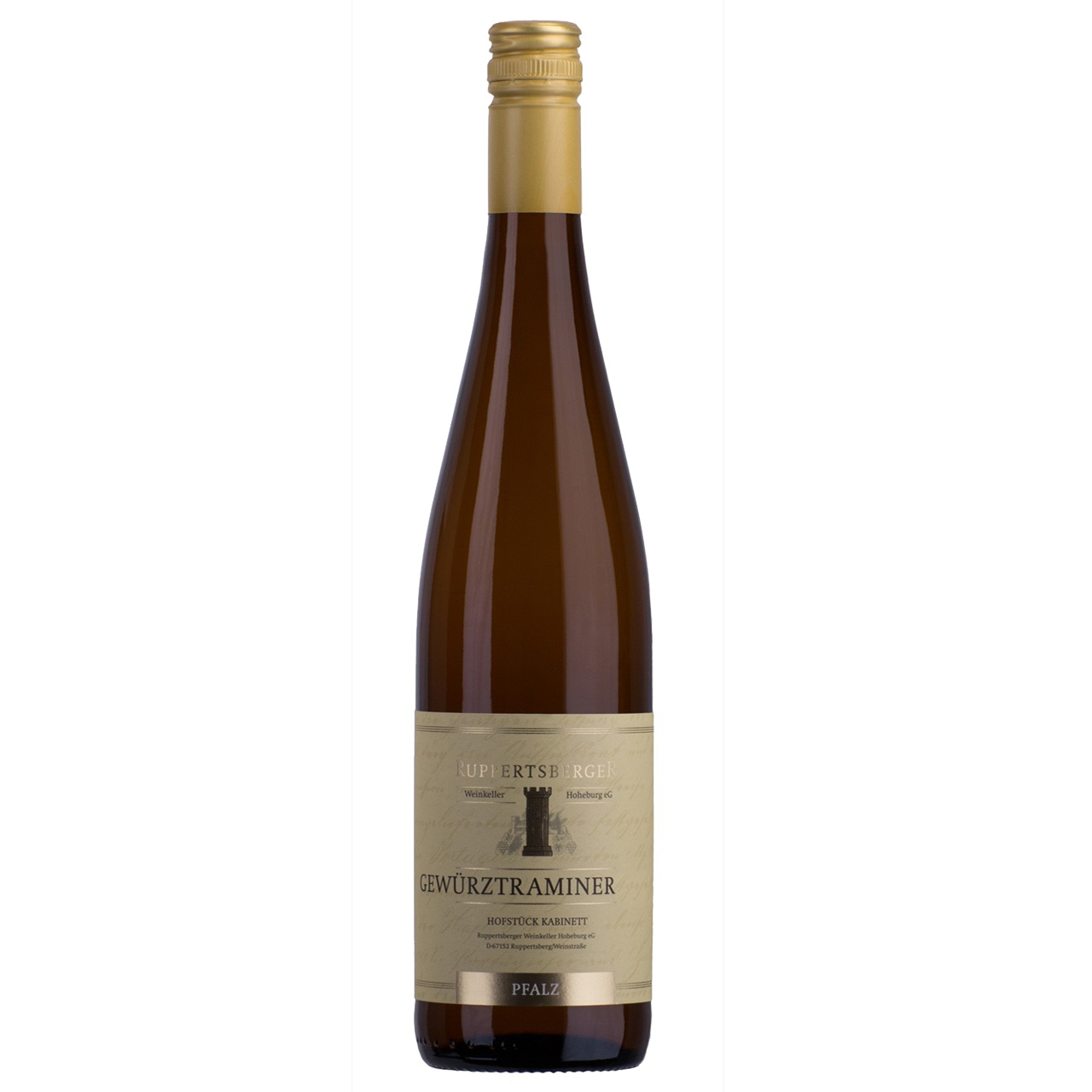
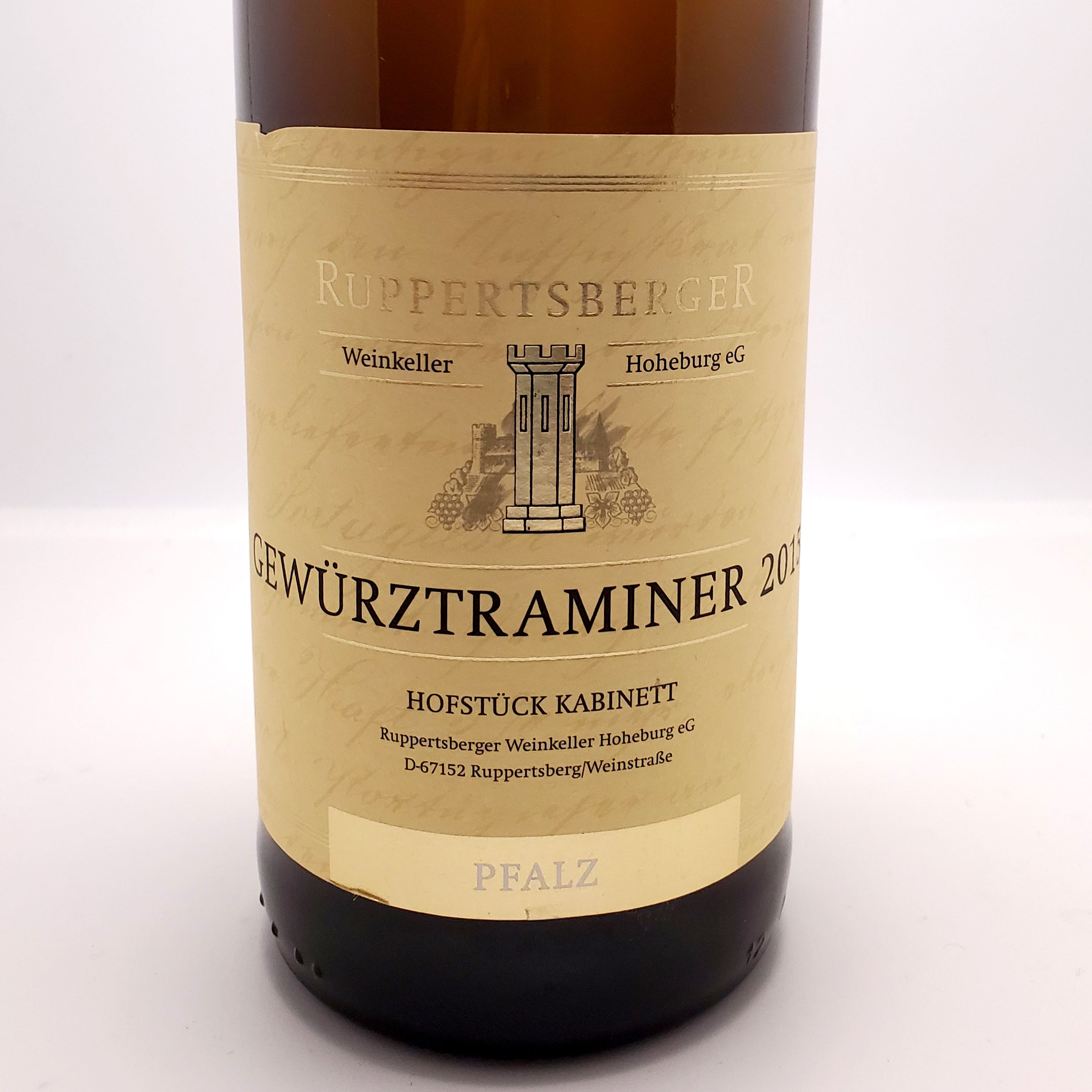
Ruppertsberger Gewürztraminer Kabinett
750 ml
HKD$200.00
Fruity and aromatic in the taste, smooth note of acidity.
Country of Origin
Germany
Brand
Ruppertsberger
Winery
Ruppertsberger Hofstück
Volume
750 ml
Color
Light yellow
ABV
12.5%

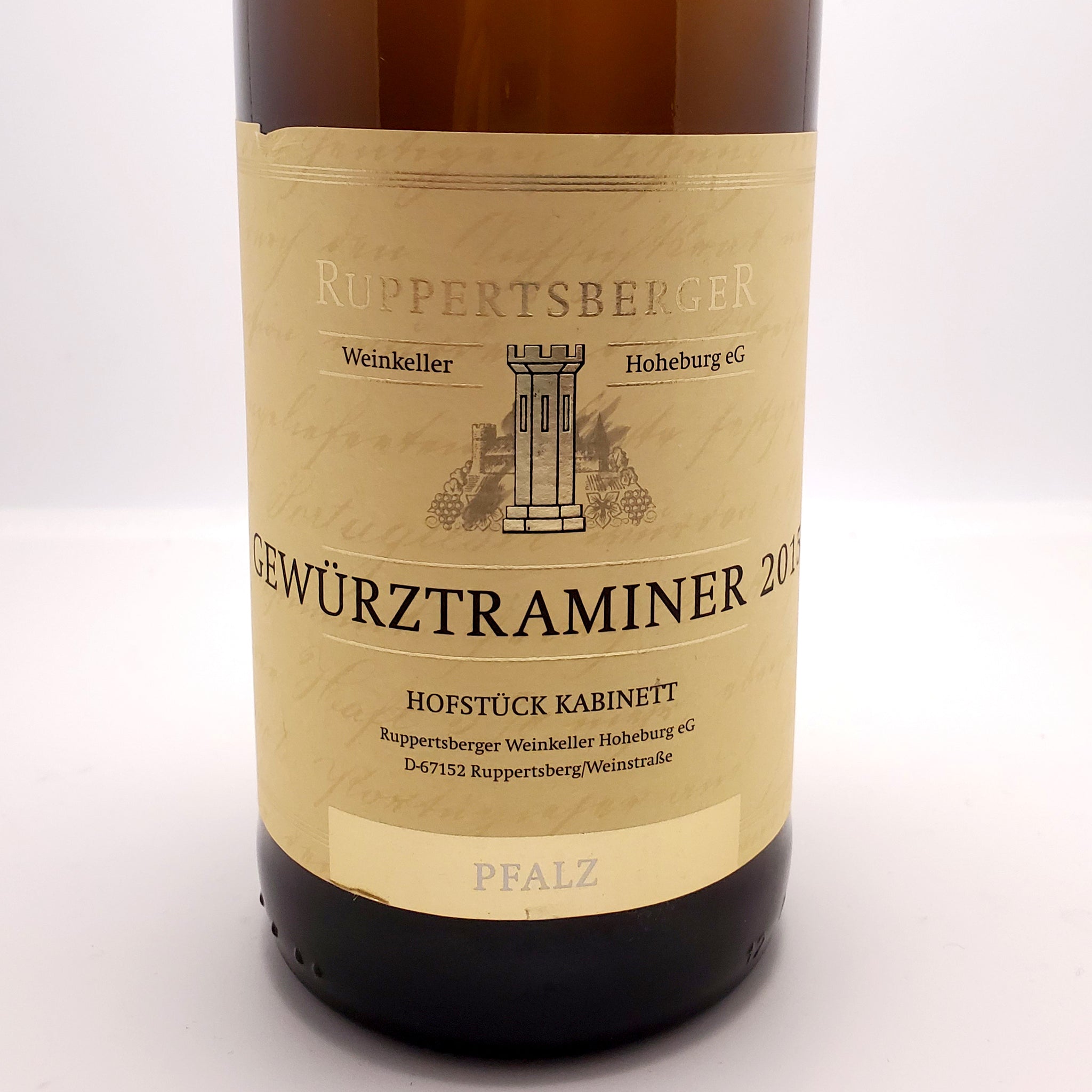
Ruppertsberger Gewürztraminer Kabinett 2015
fruity and aromatic in the taste, slight acidic notes.
Wine Detail Information
ALCOHOL
12.5 % Vol.
SERVING TEMPERTURE
6 - 10°C
FOOD PAIRING
Desserts, chocolate
GRAPE VARIETY
German Gewurztraminer
750 ml
Our wines
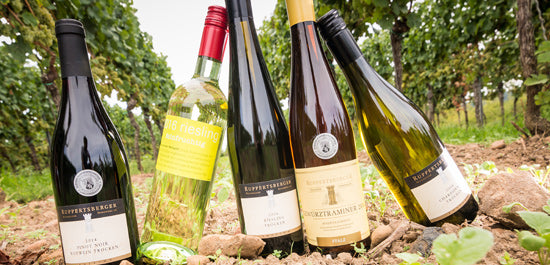
We represent the "terroir philosophy", that is, we strive to produce wines that reflect the quality of the vineyards, the terroir. For example, we can develop a Riesling on different layers and thus create different aromas in the wine. In doing so, we are particularly keen to apply old experience and our knowledge of the many, no matter how small, vineyard parcels in our wine cellar. We combine this knowledge with completely new, innovative and gentle methods to make our wines taste even fresher, finer and more harmonious. Because this is the wine style that we pursue.
We carry different wine lines, each of which is supposed to serve very different tastes. We not only produce these with the help of the terroir concept, but we also harvest our grapes at various stages of ripeness. If we bring them in shortly after they are fully ripe, we get a particularly light and fruity wine after fermentation. If we let the grapes hang until the late harvest or selection stage, the aromas change and become more diverse and powerful. So we can offer everything from sparkling liter wine to fine premium wine. With our work, we therefore not only show the diversity and potential of our locations around the wine village of Ruppertsberg, but also all of our skills in viticulture.
History
Hounding
The Ruppertsberger Weinkeller Hoheburg was created through the merger of the winegrowers' association (founded in 1911) and the Hoheburg cooperative (founded in 1917) in 1968. Further mergers and the expansion of the production facility in Ruppertsberg made our company one of the most modern and best-equipped in the Palatinate.
Naming
Hoheburg - Our wine cellar is named after a medieval castle that stood on Ruppertsberg territory until the 14th century and was probably built on the foundations of a Roman fort. It is believed that two Roman roads crossed here. One led from Altrip on the Rhine in the direction of Kaiserslautern, the other from Strasbourg to Bingen. At this important intersection stood the aforementioned Roman fort, in the vicinity of which wine - an everyday drink for the Roman soldiers - was made.
Ruppertsberg viticulture
Numerous finds that were made in the vineyards here attest to the almost 2000-year history of our viticulture. Friedrich von Bassermann-Jordan writes about a glass barrel jug from the 4th century: “A glass bottle found in a stone coffin in 1808 in the formerly Roman Hoheburg near Ruppertsberg (...) clearly shows a wine depot. The workers are said to have drunk the contents at the site. " (Source: Friedrich von Bassermann-Jordan, The winegrowing of the Palatinate in antiquity, Neustadt 1946). The history of the place and the local viticulture goes back a long way.

Vineyards
In the sun-drenched wine town of Ruppertsberg on the German Wine Route, our 86 winegrowers grow their grapes on 400 hectares of vineyards with a lot of passion, experience and the necessary sensitivity. Overall, we market wines from a vineyard area of around 500 hectares per year.
We represent the philosophy that quality arises in the vineyard and is refined in the wine cellar. Our winemakers know every nuance of their rows of vines very well and thus manage to bring out the specific characteristics of the grape varieties in harmony with the soil, microclimate and weather of the respective parcel. It is precisely this cross-generational experience that enables our winemakers to produce the best grapes in each vintage and thus to bring the qualities of each vine into the glass.
Of course, the unmistakable climate and our extraordinary soils also play a major role here. Ruppertsberger Linsenbusch, Ruppertsberger Reiterpfad, Gimmeldinger Meerspinne - these are the names of some of our vineyards in and around our homeland. These names have different origins. They are often based on history or named after the characteristics of the location, such as the shape or the type of soil. Sometimes they also arise entirely from the fantasy of the stories that are told about them.


