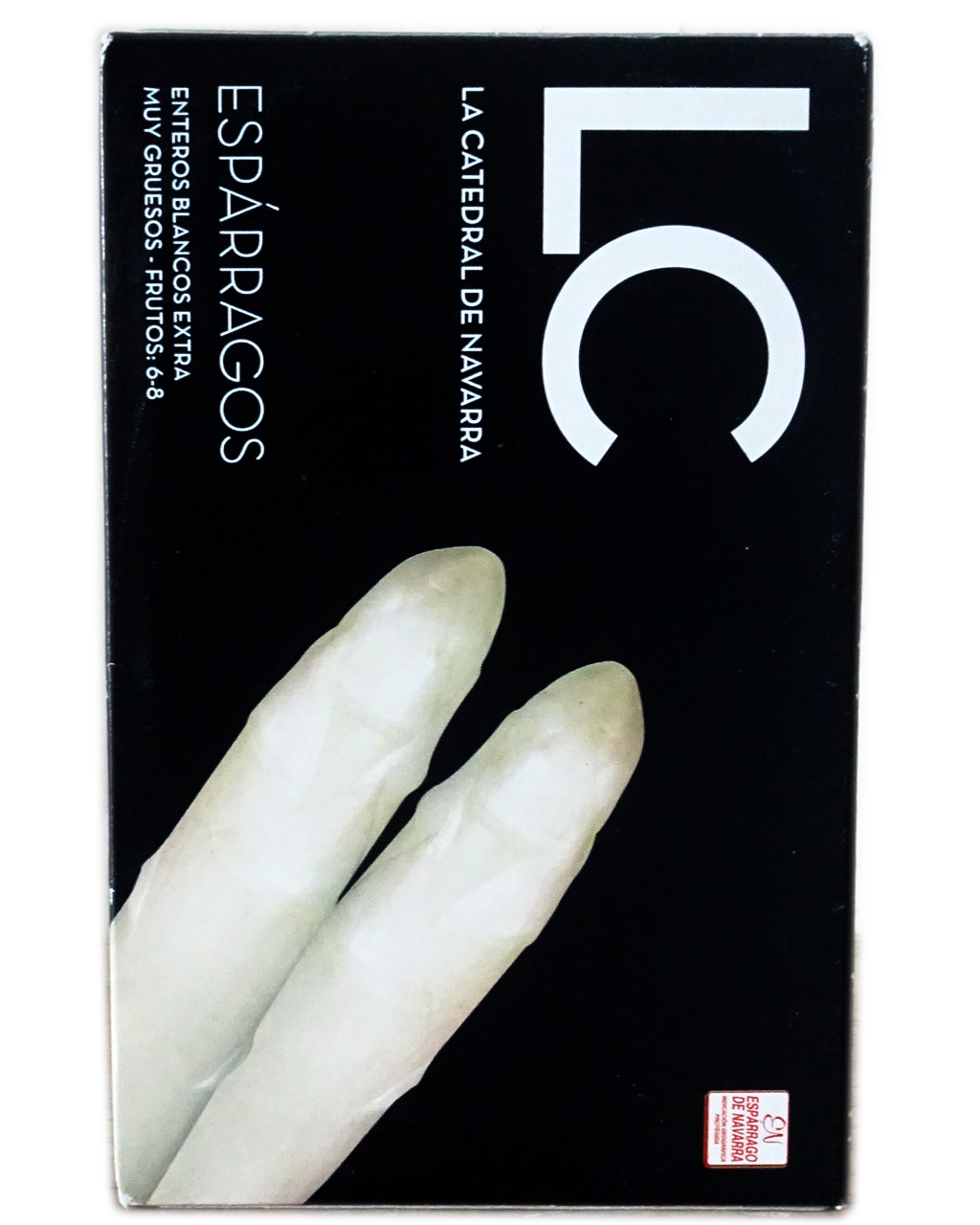
White Asparagus
220 g
HKD$118.00
It comes from the province of the Navarra in the Northeastern part of Spain which is famous for white asparagus. In Europe, white asparagus is considered a delicacy. It is basically green asparagus deprived of sunlight. This process is called “etiolation”. The harvest takes place between the months of April and June.
White asparagus has a subtle flavour and is smooth in texture.
7-9 Pieces
Country of Origin
Spain
Brand
LC(La Catedral de Navarra)
Asparagus, Water, Salt and Acidulant (Citric Acid)
Weight
220 g

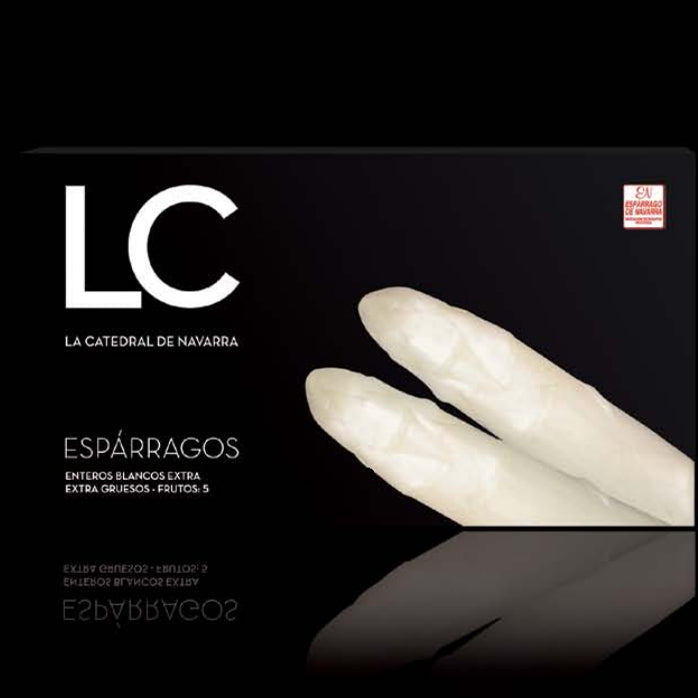
納瓦雷白蘆筍
ASPARAGUS OF NAVARRA
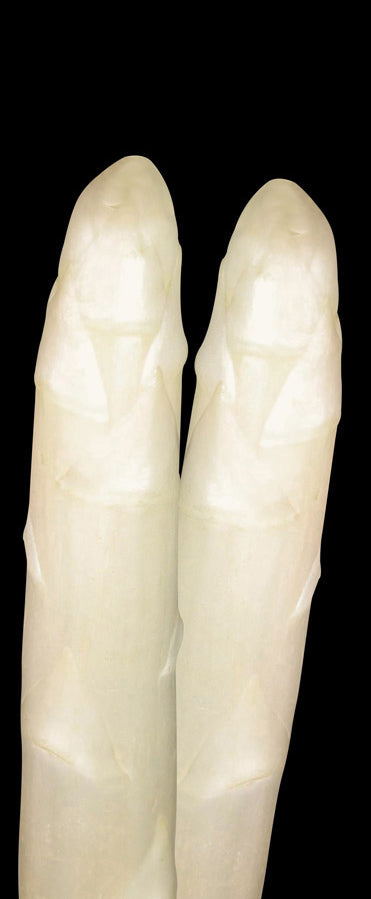
White, fibre-free and with the characteristic bitter taste of this Denomination of asparagus. Always harvested near our facilities and scalded before peeling so that the skin protects the properties and aromas.
Harvest: April - June
Our Elaboration
1
THE FIELDS

There is no greater secret to obtain a good preserve than working with excellent raw material in the fields right from the start. La Catedral de Navarra cultivates its products near its facilities, it knows the farmers it works with and carries out a strict control of each one of the steps involved in growing their vegetables.
2
THE HARVEST

The products of La Catedral de Navarra are always seasonal, because it is the natural cycle of the plants that gives the best results with respect to flavour, aroma and texture. All the vegetables that bear the LC label have been hand-picked and are at optimum ripeness.
3
THE PRODUCTION

Rigour in the quality and care during handling. The La Catedral vegetables are packed manually following the strictest health and tasting controls. All the work is organised so that the time it takes from harvesting to packing is as short as possible. Furthermore, the process that each product has to pass is designed to avoid the loss of its fresh aromas. Thus, the asparagus are blanched with skin so that this acts as a protective barrier for all its properties, or the peppers are handled without touching water for them to preserve the intensity of the "piquillo" pepper that has just come off the stove.
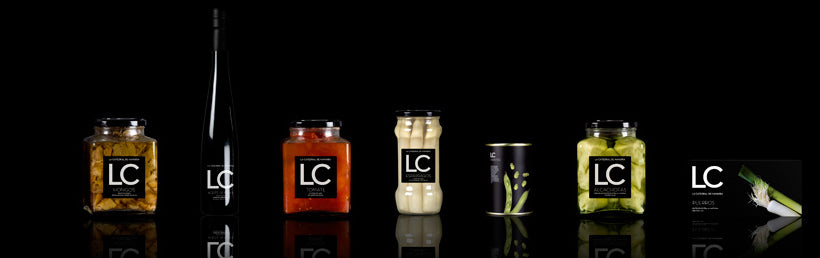
About us
The vegetables from La Catedral de Navarra boast an outstanding and refined flavour.
The secret lies in the rich fertile soil, thanks to the extreme temperatures and abundant rainfall, typical of the Navarrese Ebro valley. Here, nature endows us with her delicious produce. And we preserve it for the most discerning palates.
La Catedral de Navarra is the outcome of the firm commitment of the Sainz family, having dedicated more than 70 years to the business of canned vegetables, and their dedication to quality and respect for natural products.
Research carried out by this brand focuses on preserving the flavour and texture of the recently harvested vegetables. The products are elaborated and preserved immediately on arrival from the field, and each step of the process is intended to safeguard their full authentic flavour.
In La Catedral de Navarra we supervise, carefully and closely, each step of the process. We select the best land for the crops, always in the vicinity of our plant. We choose the best produce for the most passionate connoisseurs of gastronomy. We carry out strict quality controls, both our own and for the different denominations of origin to which our most emblematic products belong. We make much of our designs so that they measure up to the raw material we offer.
History and Tradition

The Sainz family started up a small jar sealing business.

The history of La Catedral de Navarra dates back to the first half of the last century. During the Civil War, soldiers' mothers preserved vegetables, casseroles and pâtés for their sons and daughters, and after the war it was also essential to store as much seasonal food as possible so that they were available all year round, Preserves became both necessary and a part of daily life, above all in regions such as the Navarre riverbanks, where the fertile region produced such exquisite products that they were well worth storing.

Petra Lopez, grandmother of the current owner of La Catedral de Navarra, started up a small jar sealing business in Mendavia, combining her knowledge of the fields with a strong enterprising nature. She and her family used tin to seal jars that contained both their own vegetable preserves and those prepared by the villagers in their homes. By the mid-40s of the last century they were already selling artichokes, tomatoes, peppers, white asparagus and leeks. Since then, all the family's efforts have been aimed at obtaining the best vegetables and preserving their flavour intact, which has converted La Catedral de Navarra into a synonym of quality.
質量證書

Espárrago de Navarra
The Esparrago de Navarra (Asparagus of Navarre) has been protected by a Specific Designation since 1986 and Protected Geographical Indication since 2003. These bodies were created to protect the crops of the Ebro riverbanks from productions from other origins, and guarantee the end consumer compliance with strict quality standards.

Piquillo de Lodosa
The Designation of Origin was created in 1987 and includes eight municipalities: Lodosa, Mendavia, Andosilla, Azagra, Carcar, Lerin, San Adrian and Sartaguda. It protects and controls the cultivation and production of the "piquillo" variety of peppers, autochthonous of Navarra, in these locations under strict quality controls.

Artichaut de Tudela
The Alcachofa de Tudela (artichoke of Tudela) Protected Geographical Indication was registered in the European register on the 9th October 2001, although the Quality Designation had already existed since 1988 for fresh produce. The geographical production area includes 33 locations on the Navarre Riverbank area.

Aceite de Navarra
The Extra Virgen Olive Oil from Navarre is the European oil that is produced furthest to the north. The Designation, created in 2007, covers 135 municipalities plus the territory of Bardenas Reales. The limestone soil, the dry climate, the contrast between cold nights and warm days, and the need to harvest early to avoid the frost, determine the low degree of maturity with which the olive is picked. The result is an oil with a balanced and complex profile, with a high intensity of fruity attribute.

BRC
This is a standard developed by the British Retail Consortium in 1998. It guarantees safety and controls the suppliers legal requirements. The BRC is based on the hazard analysis and critical control points (HACCP), the quality management system, factory environment, product control, and control of the processes and workers.

IFS
The IFS (International Food Standard) is essential to export to France and Germany, although other countries such as Switzerland, Austria, Belgium or Poland are also committing to this model. With the same food safety objective as the BRC, it came about in 2002 when the Federal Union of German Trade Associations (BDH) and the French Trade and Distribution Federation (FDC) developed it under the umbrella of the Global Food Safety Initiative.

Organic Crop
La Catedral de Navarra has more and more organic crops, thanks to which it has obtained the European certification for these products. This stamp guarantees practices such as crop rotation, strict limits in the use of chemicals or the cultivation of autochthonous varieties.